Group boards
Electrical components / Group boards
Panelboards and switchboards - the heart of your electrical installation
What is a group board/chalkboard?
A distribution board - also called a switchboard - is the central point in an electrical installation where power is distributed to the different groups and circuits in a building. The panel brings together fuses, circuit breakers, circuit breakers and other modular components that together ensure a safe and controlled distribution of electricity.
For example, it could be:
- lighting
- sockets
- Kitchenware and appliances
- heating installations
- technical installations
In residential, commercial and industrial environments, the panelboard is an important part of the installation as it protects both the installation and users from faults, overloads and short circuits.
Safety and protection in electrical installations
An important function of a switchboard is to protect the installation from electrical faults. The panel typically contains components that:
- protects against overload
- cuts power in the event of a short circuit
- Detects fault current (RCD/HPFI)
In addition, many switchboards are designed with robust enclosures and a high degree of protection to protect against dust, moisture and mechanical impact.
How does a group board work?
A switchboard acts as a distribution center for the electricity in a building. The power comes from the mains and is fed into the switchboard where it is distributed to the different groups in the installation.
The switchboard contains protection components that ensure that the power is disconnected if there is a fault in the installation. This could be a short circuit, overload or fault current.
This structure makes it possible to divide the installation into several smaller circuits so that the load is distributed correctly. It also makes it easier to locate faults and service the installation.
Building a group board
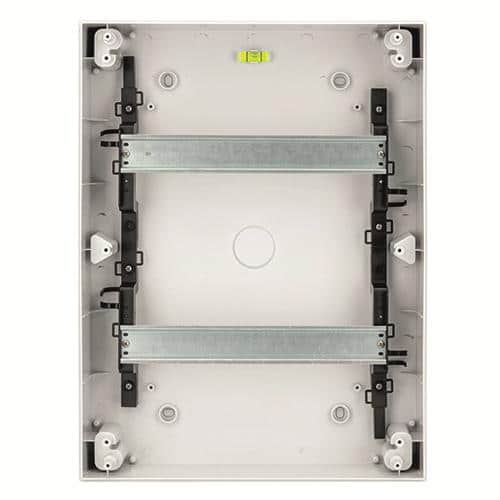
A typical control panel consists of several central components that together make up the installation's control and protection.
The most important parts of a cluster board are:
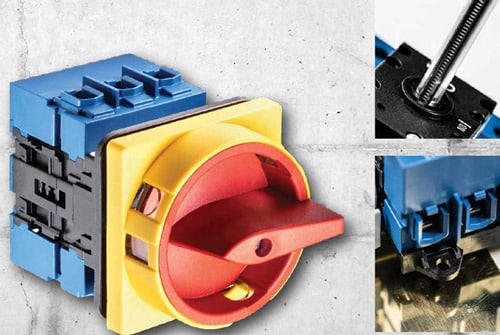
Main switch
Allows you to disconnect power to the entire installation
Circuit breakers
Protects individual groups against overloads and short circuits
Residual current device (HPFI/RCD)
Detects fault current and cuts power to protect against electric shock
DIN rails
Rails where the modular components are mounted
Terminal blocks
Used for connecting and distributing wires
This structure makes modern panelboards flexible and easy to adapt to different installations.
Flexible installation and plenty of space
Panelboards are designed with a focus on easy installation and clear cable routing. Modern panels provide ample space for both components and cables, making installation clearer and easier to work with.
Features such as cable holders, adjustable DIN rails and access to terminal blocks make it possible to build the installation in a structured way. At the same time, it makes servicing and later expansions easier.
Different types of group boards
Group panels come in many sizes and configurations depending on the needs of the installation. The number of modules and groups can vary from smaller panels for residential installations to larger panels for commercial and industrial applications.
The choice of board depends, among other things, on:
- number of groups in the installation
- Room for future expansion
- Installation environment (e.g. indoor or outdoor)
- Enclosure and protection requirements
That's why it's important to choose a solution that fits both the size of the installation and the requirements for safety and functionality.
IP and IK ratings in panelboards and switchboards
When choosing a panelboard or switchboard, two of the most important technical classifications are IP classification and IK classification.
These indicate the board's protection against ingress of foreign objects and water and its Resistance to mechanical influences.
Both classifications are international standards and are used to assess whether an enclosure is suitable for the environment where the panel will be installed.
Correlation between IP, IK and application environment
The IP and IK ratings are often used together to assess whether a panelboard is suitable for a particular installation.
Generally applies:
- Lower IP class (e.g. IP40) Typically used in protected indoor environments
- Higher IP class (e.g. IP66) Use in environments with dust, moisture or water exposure
- Higher IK class is relevant in installations where the panel may be exposed to impact or mechanical stress
When choosing a panelboard or switchboard, both Environmental conditions, installation site and mechanical impact therefore be included in the assessment.
IP rating - protection against dust and water
The IP classification (Ingress Protection) indicates the enclosure's protection against ingress of solid particles and liquids. The classification consists of two digits:
IPxy
- X = protection against solid objects and dust
- Y = protection against water
The higher the number, the higher the level of protection.
Examples:
- IP40
- Protection against solid objects larger than 1 mm
- No protection against water
- Typically used in indoor installations in dry environments
- IP66
- Fully dustproof enclosure
- Protected against powerful water jets from all directions
- Suitable for demanding installations or environments with moisture and dust
For panelboards and switchboards, the IP rating means that the enclosure protects the electrical components from environmental influences and ensures stable and safe operation.
In the series we carry, for example:
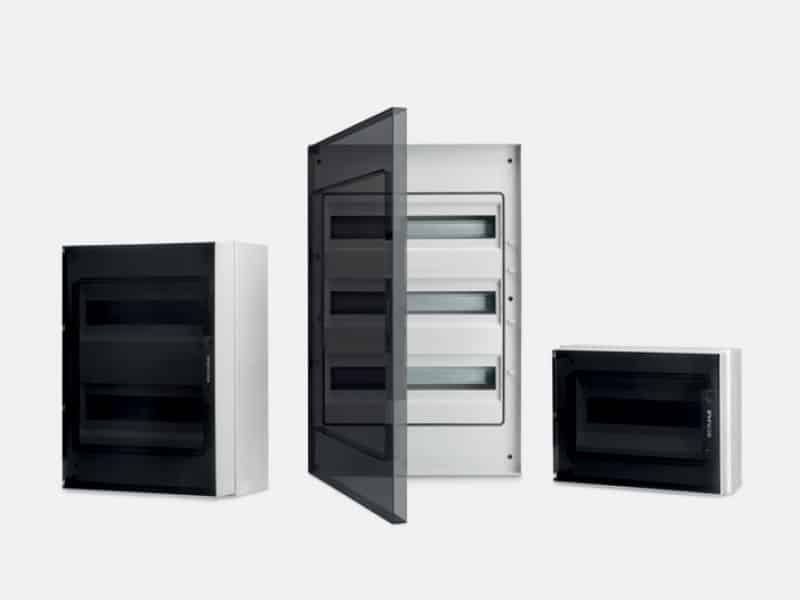
- Domino IP40 series: IP40
- Domino IP66 series: IP66
- Ikona series: IP66
IK rating - mechanical impact resistance
The IK classification indicates the enclosure's Resistance to mechanical influences, for example, blows or shocks.
The classification typically ranges from IK00 to IK10, where higher numbers mean greater impact resistance.
IK classes are defined based on the energy the enclosure can withstand in a standardized impact test.
Examples:
- IK06 - Withstands impacts of up to 1 joule
- IK07 - Withstands impacts of up to 2 joules
- IK09 - Withstands impacts of up to 10 joules
In practice, the IK rating is important in environments where switchboards can be exposed to mechanical impact.
In our current board series, the following impact resistance applies:
- Domino IP40 series: IK06
- Domino IP66 series: IK07
- Ikona series: IK09
Find the right panelboard for your installation
When choosing a panelboard or switchboard, it's important to consider the size of the installation and future needs. The number of groups, room for expansion and enclosure requirements all play a role in choosing the right panel solution.
Here you'll find a selection of panelboards and switchboards suitable for both residential and commercial installations.
Our wide range of panelboards makes it possible to put together a solution that fits the needs of your installation - read the Scame brochure here to find out what you need and we'll get it for you.
FAQ - frequently asked questions about panelboards and switchboards
What is the difference between a panelboard and an electrical panel?
In practice, there is no difference between a panelboard and a switchboard. Both terms are used for panels that distribute power to the different groups and circuits of the installation. In commercial and industrial installations, the terms are often used side by side depending on the structure and use of the switchboard.
How many groups should a group board have?
The number of groups in a switchboard depends on the size, load and function of the installation. In commercial and industrial buildings, the switchboard is typically sized based on the number of circuits, machines, technical installations and requirements for future expansion.
Can a group board be expanded?
Yes, many modern panelboards are modular and allow for expansion with more components and groups. For commercial and industrial installations, it is often beneficial to choose a panel with extra modular space so that the installation can be adapted to future needs.
Where is a panelboard typically placed in commercial installations?
In commercial and industrial buildings, panelboards are typically placed in technical rooms, electrical rooms or panel rooms where there is good access for installation, service and maintenance. The location depends on the structure of the installation and the building's technical installations.
What components are typically mounted in a panelboard?
A switchboard typically contains modular components such as circuit breakers, residual current devices (RCD/HPFI), relays and other DIN-mounted devices. The composition depends on the protection, control and load requirements of each installation.
How to choose the right panelboard for an installation?
The choice of panelboard depends on the number of groups, space for components, installation environment and the possibility for future expansion. In many commercial installations, panels with extra module space are chosen so that the installation can be expanded without replacing the entire panel.
What degree of enclosure should a panelboard have?
The choice of enclosure depends on the installation environment. Commercial and industrial environments may require panels with a higher degree of protection against dust, moisture or mechanical impact. Therefore, the enclosure class is typically chosen based on the installation environment and applicable installation requirements.
See our selected panelboards
Here you see a selection of switchboards - if you don't see what you need, contact us at thiim@thiim.com
Are you missing other electrical components?
Find what you need here - or contact us and we'll find what you need