
Phase fault relays
Thiim Relays / Our products / Phase fault relays
Benefits of our phase failure relays
- Reliable detection of phase errors and phase imbalance
- Protection against phase loss, incorrect phase rotation and asymmetry
- Supports multiple supply voltages and grid types (TT/TN/IT)
- Suitable for industrial motors, switchboards and power supply systems
- Easy installation and quick fault diagnosis
Phase fault relays
Phase failure relays - protect your AC installations against critical phase failures
Phase faults can lead to serious damage to motors, transformers and inverters - often without warning. With a reliable phase fault relay from Thiim, you get an effective solution for monitoring AC power supplies that ensures early detection of phase imbalance, phase asymmetry, phase rotation and phase voltage.
Our relays monitor three-phase installations in both grounded (TT/TN) and ungrounded (IT) systems and warn of deviations in phase frequency, phase deviation and phase loss. This makes them indispensable in installations with sensitive or expensive components - like AC motors, inverters and transformers.
Here you can see a selection of our many phase failure relays - Contact us to learn more
Voltage and phase rotation
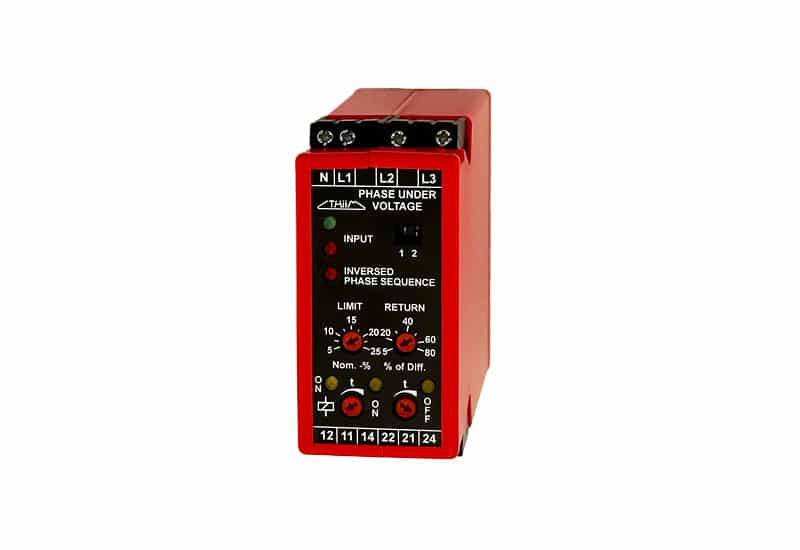
PNDA-PNDI
Voltage and phase rotation - PNDA-PNDI
The PNDA/PNDI relays detect undervoltage in each phase (3P+N power grid),
and phase rotation to ensure that star-connected AC motors and drive systems
is correctly supplied and rotates in the desired direction.
Benefits:
- Devices for all common nominal system voltages 100 VAC-480 VAC
- 3 user-selected nominal voltages in the same device
- Wide range of sensitivity, undervoltage level and time delay settings
- 6-second self-powered backup in case of total power loss (PNDI version)
Voltage and asymmetry
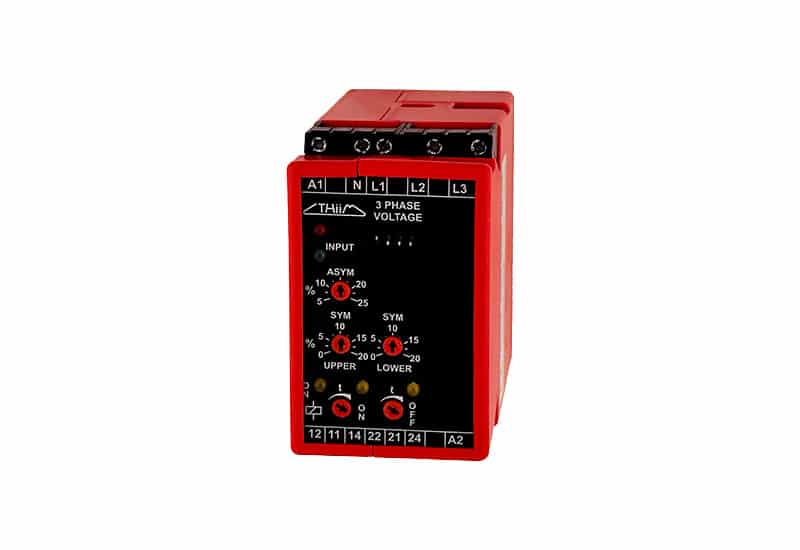
PADA-PADI-PANA
PHASE ASYMMETRY AND VOLTAGE - PADA-PADI-PANA
PADA/PADI and PANA/PANI phase error relays are used to detect phase errors
outages and imbalance due to phase angle or phase voltage deviations.
They can be used to automatically switch off AC motors before damage occurs due to a power supply failure and to switch them back on when proper supply is restored.
Benefits:
- Devices for a wide range of nominal system voltages 100 VAC-480 VAC
- Choice of 3 nominal voltages in one unit
- Powered from the installation or separate power supply
- 6 second self-sufficient real time delay as backup (PADI and PANI versions)
Voltage, asymmetry and phase rotation
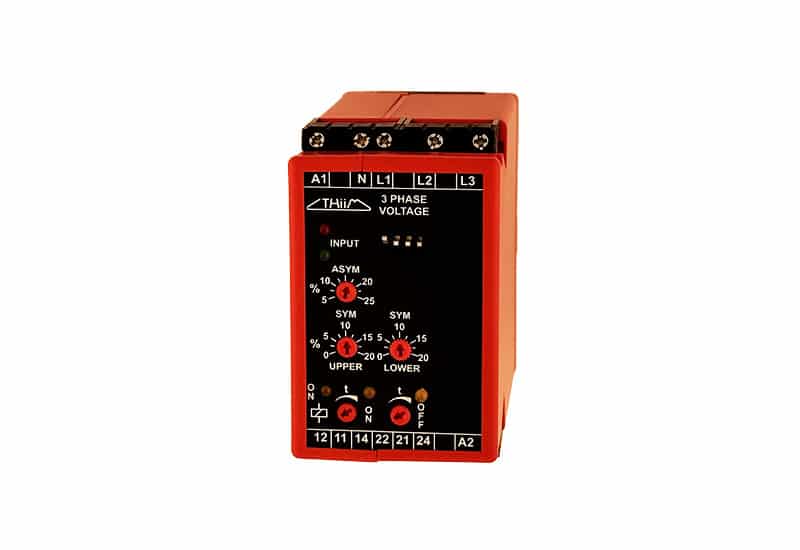
PAHA-PAHI-PAMA
PHASE ASYMMETRY, TENSION AND PHASE ROTATION - PAHA-PAHI-PAMA
PAHA/PAHI and PAMA/PAMI relays detect phase loss and imbalance due to phase angle or phase voltage deviations as well as phase rotation in 3-phase systems with or without zero crossing without zero crossing.
Benefits:
- Devices available for all common nominal voltages 100 VAC-480 VAC
- 3 nominal voltages selectable in one unit
- Powered from the installation or from separate external power supply
- 6 seconds of self-provided real time delay as backup (PAHI and PAMI versions)
- Individual adjustment of unbalanced and balanced under- and overvoltage levels
Voltage and frequency
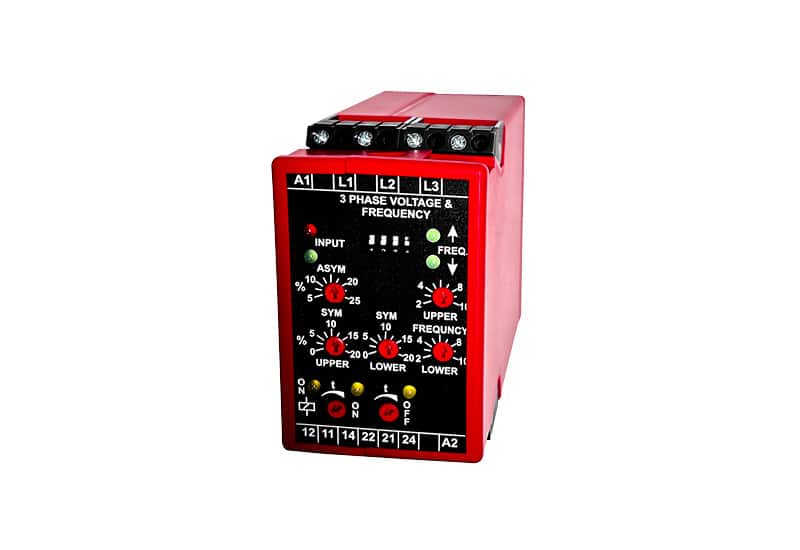
PAFA-PAGA
PHASE ASYMMETRY, VOLTAGE AND FREQUENCY - PAFA-PAGA
PAFA and PAGA relays detect phase loss and phase recovery in 3-phase systems with or without neutral connection. They are designed to monitor unbalance caused by phase angle and phase voltage deviations, as well as deviations in nominal frequency.
Benefits:
- Devices available for all common nominal voltages 100 VAC-480 VAC
- 3 nominal voltages selectable in one unit
- Separate power supply to ensure continuous functionality in case of total power failure in the system being monitored
- Individual adjustment of unbalanced and balanced under- and overvoltage levels
- Additional under and over frequency adjustment (% deviation from nominal)
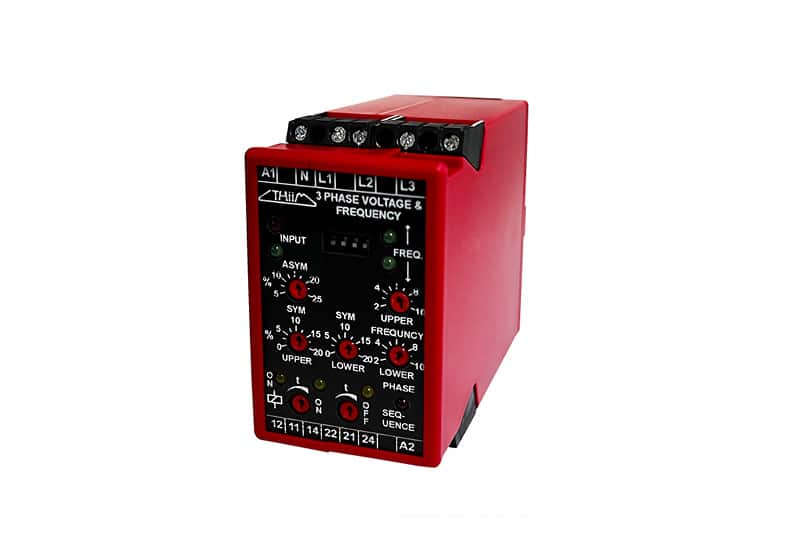
PAFB-PAGB
PHASE ASYMMETRY, VOLTAGE, FREQUENCY AND PHASE ROTATION - PAFB-PAGB
PAFB and PAGB are phase fault relays that offer combined monitoring of multiple
electrical parameters in 3-phase systems, with and without zero connection.
They primarily detect phase loss and imbalance caused by phase angle or phase voltage deviations and phase rotation. In addition, they also detect deviations in nominal frequency
Benefits:
- Devices available for all common nominal voltages 100 VAC-480
- 3 nominal voltages selectable in one unit
- Separate power supply to ensure continuous functionality in case of total power failure in the system being monitored
- Individual adjustment of unbalanced and balanced under- and overvoltage levels